
Front desk operations heavily rely on readily accessible documentation, and PDF files provide a secure, universal format for crucial information management.
What is a Front Desk?
The front desk serves as the central hub of any organization welcoming visitors, be it a hotel, hospital, or corporate office. It’s the initial point of contact, shaping the first impression and setting the tone for the entire experience. Beyond simply being a physical location, it represents the organization’s hospitality and efficiency.
Crucially, a well-managed front desk involves significant documentation – often stored and shared as PDF files. These PDFs contain vital guest information, registration details, and internal procedures. The front desk team utilizes these documents daily for smooth operations, ensuring accuracy and compliance. Efficient handling of these PDF resources is paramount to providing excellent service and maintaining organizational standards.
The Importance of Efficient Front Desk Management
Efficient front desk management directly impacts customer satisfaction and operational success. A streamlined process minimizes wait times, reduces errors, and fosters a positive environment. This efficiency is significantly enhanced by well-organized documentation, frequently utilizing PDF formats for accessibility and security.
PDF files allow for standardized forms, readily available policies, and easily shared emergency protocols. Properly managed PDFs ensure consistent information delivery and reduce the risk of miscommunication. Furthermore, secure PDF storage protects sensitive guest data, maintaining privacy and building trust. Investing in efficient front desk systems, including PDF workflows, translates to a stronger brand reputation and increased profitability.
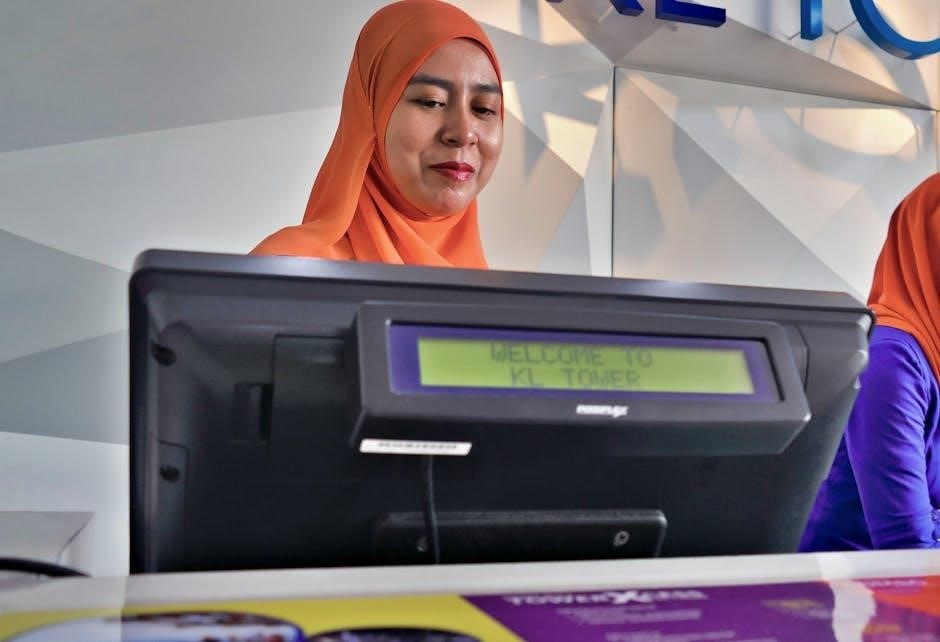
Key Responsibilities of a Front Desk Professional
Professionals manage guest experiences, handle inquiries, and maintain records – often utilizing PDF documents for registration, policies, and incident reporting efficiently.
Greeting and Welcoming Guests
First impressions are paramount, and a warm greeting sets the tone for a guest’s entire experience. Often, this initial interaction involves verifying pre-registration details, which may be conveniently accessed via a PDF document stored on the front desk system.
Having quick access to a guest’s PDF registration form allows staff to confirm information efficiently, ensuring accuracy and personalization. Furthermore, welcome packets, sometimes distributed as PDFs via email or a guest portal, can contain essential hotel information, local attractions, and important policies.
These PDF resources streamline the check-in process and proactively address potential guest questions, contributing to a smoother and more welcoming arrival; A readily available PDF of frequently asked questions can also empower staff to provide consistent and helpful responses.
Managing Check-Ins and Check-Outs
Efficient check-in/check-out procedures are central to front desk operations, and PDF documents play a vital role. Digital registration forms, saved as PDFs, minimize paper usage and streamline data collection. These completed PDFs are easily stored and retrieved within the Property Management System (PMS).
During check-out, a PDF invoice can be quickly generated and emailed to the guest, providing a clear record of charges. Similarly, incident reports, often completed as PDF forms, document any issues that arose during the stay.
Having standardized PDF templates for these processes ensures consistency and accuracy. Securely archiving these PDF records is crucial for auditing and future reference, contributing to a well-managed and legally compliant operation.
Handling Phone Calls and Messages
Effective communication is paramount, and PDFs assist in message taking and relaying information. Standardized message forms, readily available as PDF templates, ensure all necessary details are captured – date, time, caller’s name, contact number, and the complete message.
These completed PDF message forms can be digitally filed, linked to guest profiles within the PMS, or printed for immediate delivery. For detailed requests or instructions, a PDF document can be created outlining specific actions needed.
Furthermore, PDFs can store pre-written responses to frequently asked questions, ensuring consistent and accurate information is provided over the phone, improving efficiency and guest satisfaction.
Scheduling Appointments and Reservations
Efficient scheduling benefits greatly from utilizing PDF-based appointment confirmations and reservation details. Customizable PDF templates can automatically populate with guest information, dates, times, and any special requests, providing a clear record for both staff and guests.
These PDF confirmations can be easily emailed, printed, or saved directly to guest profiles. PDF calendars, detailing availability and bookings, offer a visual overview for staff. Furthermore, PDF forms can be used for pre-appointment questionnaires or reservation agreements, streamlining the process.
Storing frequently used appointment types as PDF templates saves time and ensures consistency in information provided, enhancing the overall guest experience.

Essential Skills for Front Desk Staff
Proficiency in accessing and utilizing PDF documents – forms, policies, and reports – is a vital skill for all front desk personnel.
Communication Skills (Verbal & Written)
Effective communication is paramount, and often involves referencing PDF documents with guests. Clearly explaining policies outlined in a PDF, or guiding someone through completing a PDF registration form, requires concise and patient verbal skills.
Written communication also plays a role; crafting professional emails summarizing information from PDF-based incident reports, or providing PDF copies of company procedures, demands accuracy and clarity. Staff must be able to interpret complex information within PDFs and relay it simply.
Furthermore, understanding how to digitally annotate PDFs for internal communication – highlighting key details or adding notes – enhances team collaboration and ensures everyone is on the same page regarding guest information or operational procedures documented in PDF format.

Customer Service Excellence
Exceptional customer service often involves quickly accessing and sharing information stored in PDF format. Providing guests with a PDF copy of hotel amenities, local attractions, or updated policies demonstrates attentiveness and proactive support.
Handling inquiries related to PDF-based registration forms or emergency procedures requires patience and a willingness to assist. Staff should be adept at explaining PDF content clearly and addressing any concerns guests may have regarding the information presented.
Proactively offering PDF documents – like directions or event schedules – before being asked showcases a commitment to guest satisfaction. Efficiently managing and distributing these PDF resources contributes significantly to a positive guest experience and builds loyalty.
Organizational and Time Management Skills
Effective organization is crucial when dealing with numerous PDF documents – registration forms, incident reports, and policy manuals – requiring a structured filing system. Quickly locating specific PDFs saves valuable time during peak hours and ensures efficient service.
Prioritizing tasks involving PDF management, such as updating forms or archiving old records, prevents bottlenecks. Implementing a consistent naming convention for PDF files streamlines searches and minimizes confusion among staff members.
Time management skills are essential for promptly processing PDF-based requests from guests, like sending directions or confirming reservations. Mastering PDF tools for quick editing and sharing further enhances productivity and overall front desk efficiency.
Problem-Solving Abilities
Unexpected issues frequently arise when working with PDF documents – corrupted files, missing information on forms, or difficulties accessing archived records. Front desk staff must quickly diagnose these problems and implement effective solutions.

This might involve utilizing PDF repair tools, contacting IT support for assistance, or creatively reconstructing data from alternative sources. Knowing how to extract specific data from a PDF, even a poorly formatted one, is a valuable skill.
Furthermore, problem-solving extends to handling guest inquiries related to PDF-based information, such as clarifying policy details or assisting with digital form completion, requiring patience and clear communication.

Technology Utilized at the Front Desk
PDF readers and editors are essential tools, alongside PMS and Office suites, for accessing, completing, and managing guest-related PDF documentation efficiently.
Property Management Systems (PMS)
PMS often integrate with document management systems, allowing for the creation and storage of guest-related PDFs directly within the system. This streamlines operations by linking registration forms, waivers, and other important documents to individual guest profiles.
Many PMS platforms enable front desk staff to generate PDF confirmations, invoices, and welcome packets automatically, reducing manual effort and ensuring consistency. Furthermore, some systems allow for PDF attachments to be emailed directly to guests prior to arrival, enhancing the guest experience.
The ability to digitally sign PDF documents within the PMS is also becoming increasingly common, eliminating the need for physical signatures and improving document security. Properly configured PMS integration with PDF functionality is vital for a modern, efficient front desk.
Microsoft Office Suite (Word, Excel, Outlook)
The Microsoft Office Suite remains a cornerstone of front desk operations, particularly for creating and managing documents that are frequently saved as PDFs. Word is used for drafting letters, policies, and customized guest communications, easily exported to PDF for secure sharing.
Excel spreadsheets often contain data that needs to be presented in a static, shareable format; converting these to PDF ensures data integrity and prevents accidental modifications. Outlook facilitates emailing PDF attachments – confirmations, invoices, or important notices – directly to guests.
Staff can efficiently create, edit, and convert documents to PDF format using these familiar tools, ensuring compatibility and accessibility across different platforms. Mastering these skills is crucial for effective front desk document handling.

Telephone Systems & Voicemail
Modern telephone systems often integrate with digital document management, allowing front desk staff to quickly access and share information as PDFs during guest interactions. For example, a guest’s reservation details, readily available as a PDF, can be referenced while on a call.
Voicemail messages, while primarily audio, frequently prompt follow-up actions requiring documentation. Staff may create a brief incident report or confirmation note in Word, then save it as a PDF for record-keeping, linked to the original voicemail if the system allows.
Efficiently handling phone inquiries and voicemails often necessitates quick access to standardized PDF forms or information sheets, streamlining responses and ensuring consistent service.

The Role of PDFs in Front Desk Documentation
PDFs are essential for front desk documentation, offering a reliable, portable, and universally viewable format for important guest and operational records.
What are PDFs and Why Use Them?
PDF, or Portable Document Format, is a file format developed by Adobe that preserves document formatting regardless of the software, hardware, or operating system used to view it. This universality is a key benefit for front desk operations.
Why are PDFs so valuable? They ensure consistent presentation of critical documents like registration forms and policies. Unlike editable word processing files, PDFs maintain their integrity, preventing accidental alterations. They are also highly portable, easily emailed, and stored securely.
Furthermore, PDFs can be password protected, adding a layer of security for sensitive guest information. Their relatively small file size makes them efficient for storage and transmission, streamlining front desk workflows and enhancing data management.
Common Front Desk PDF Documents
Several essential documents are frequently utilized in PDF format at the front desk. Registration forms, capturing vital guest details, are often PDF-based for standardized data collection. Emergency contact information, crucial for safety, is securely stored and readily accessible as a PDF.
Company policies and procedures, outlining operational guidelines, are commonly distributed as PDFs to ensure all staff have access to the latest versions. Incident reports, documenting any unusual occurrences, are also frequently completed and saved as PDFs for record-keeping.
These PDF documents contribute to efficient operations, legal compliance, and a consistent guest experience. Utilizing PDFs ensures clarity, security, and easy retrieval of important information.
Registration Forms
Registration forms, often distributed as PDFs, are a cornerstone of front desk operations. These PDFs capture essential guest information – name, address, contact details, and identification – ensuring accurate records. Utilizing a PDF format allows for standardized data collection and prevents unauthorized alterations.
Guests can often complete these forms digitally before arrival, streamlining the check-in process. Completed PDFs are securely stored, complying with data privacy regulations. The PDF format also facilitates easy integration with Property Management Systems (PMS), minimizing manual data entry.
A well-designed PDF registration form enhances efficiency and provides a professional first impression, contributing to a positive guest experience.
Emergency Contact Information
Emergency contact information, frequently maintained as PDF documents, is paramount for guest safety and efficient response during unforeseen events. These PDFs contain vital details – next of kin, emergency contacts, medical conditions, and allergies – readily accessible to front desk staff.
Storing this information in a secure PDF format ensures confidentiality and prevents unauthorized access. Quick retrieval of this PDF data is crucial in critical situations, enabling prompt communication with designated contacts. Regularly updated PDFs guarantee accuracy.
Having readily available PDF emergency contacts demonstrates a commitment to guest well-being and facilitates a swift, coordinated response to any incident.
Company Policies & Procedures
Company policies and procedures, often distributed as PDF documents, are essential for standardizing front desk operations and ensuring consistent service delivery. These PDFs outline guidelines for handling guest requests, managing complaints, security protocols, and data privacy regulations.
Utilizing PDFs for policy dissemination guarantees version control and prevents outdated information from being used. Staff can easily access and reference these PDF documents, promoting adherence to established standards. A searchable PDF format streamlines information retrieval during training or daily tasks.
Clearly defined PDF policies foster a professional environment and mitigate potential legal risks, demonstrating a commitment to ethical and compliant practices.
Incident Reports
Incident reports, frequently maintained as fillable PDF forms, are critical for documenting any unusual occurrences at the front desk – from guest complaints and minor accidents to security breaches or property damage. These PDFs provide a standardized structure for collecting essential details like date, time, location, involved parties, and a detailed description of the event.
Using PDFs ensures reports are legible, securely stored, and easily shared with relevant personnel, such as management or security teams. Digital PDF reports facilitate efficient tracking and analysis of incidents, identifying potential safety hazards or areas for service improvement.
Properly completed PDF incident reports are vital for legal and insurance purposes, providing a documented record of events.

Creating and Managing Front Desk PDFs
PDF creation and management involve selecting appropriate software, ensuring document security, and establishing a clear system for file organization and accessibility.
PDF Editing Software Options
Numerous software solutions cater to PDF editing needs at the front desk. Adobe Acrobat Pro remains the industry standard, offering comprehensive features like form creation, advanced editing, and security options, though it comes with a subscription cost.
Alternatives include Nitro PDF Pro, providing a robust feature set at a competitive price, and Foxit PDF Editor, known for its speed and lightweight design. For simpler tasks, free options like LibreOffice Draw or online tools such as Smallpdf and iLovePDF can suffice.
When choosing, consider the frequency of editing, the complexity of required changes (form filling versus extensive content modification), and budget constraints. Ensure the chosen software integrates seamlessly with existing front desk workflows and offers adequate security features to protect sensitive guest information contained within PDF documents.
Security Considerations for Front Desk PDFs
Protecting sensitive guest data within PDF documents is paramount. Implement password protection to restrict access to confidential forms like registration details and emergency contact information. Utilize encryption features offered by PDF editing software to scramble data, rendering it unreadable without the correct password.
Control editing permissions; prevent unauthorized modifications to crucial documents. Regularly update PDF software to patch security vulnerabilities. Be cautious of phishing attempts involving malicious PDF attachments.
Establish a clear policy regarding PDF storage and access, limiting access to authorized personnel only. Consider digital signatures for verifying document authenticity and preventing tampering. Regularly audit PDF security settings to ensure ongoing protection of guest privacy and compliance with data protection regulations.
Best Practices for PDF File Naming & Organization
Consistent and descriptive file naming is crucial for efficient PDF management. Use a standardized format, including date (YYYYMMDD), document type, and guest name (e.g., 20240726_RegistrationForm_SmithJohn). Avoid spaces and special characters in filenames.
Establish a logical folder structure on your system. Categorize PDFs by document type (Registration, Incident Reports, Policies) or date range. Implement a clear version control system (e.g., _v1, _v2) when updating documents.
Regularly archive older PDFs to maintain system performance; Utilize cloud storage or secure network drives for backup and accessibility. A well-organized PDF library streamlines operations and ensures quick retrieval of essential information.

Resources for Front Desk Training (PDFs & Online)
PDF guides and accessible online courses empower front desk staff, enhancing skills in guest service, operations, and efficient PDF document handling.
Industry-Specific Training Materials (PDFs)
PDF-based training materials tailored to specific industries – hospitality, healthcare, corporate – offer focused skill development for front desk professionals. These resources often include detailed guides on industry regulations, compliance procedures, and best practices for guest or patient interactions.
PDFs allow for easy distribution and offline access to crucial information like emergency protocols, security procedures, and brand standards. Many hotel chains and healthcare systems provide downloadable PDF manuals covering everything from check-in procedures to handling sensitive data.
Furthermore, specialized PDF workbooks can provide interactive exercises and assessments to reinforce learning; Searching for “front desk training PDF” alongside your specific industry will yield relevant, downloadable resources to enhance staff competency and ensure consistent service delivery.
Online Courses and Webinars
Complementing PDF resources, numerous online courses and webinars provide dynamic front desk training. Platforms like Coursera, Udemy, and LinkedIn Learning offer modules covering essential skills – customer service, communication, and PMS software – often with downloadable supplementary PDF guides and checklists.
Webinars, frequently recorded and available as PDF transcripts or slide decks, deliver focused training on specific topics like handling difficult guests or upselling techniques. These formats allow for flexible learning schedules and repeated review of key concepts.
Many industry associations also host webinars and provide access to exclusive training materials, sometimes in PDF format, for their members. Combining online learning with readily available PDF documentation creates a comprehensive and effective training program for front desk staff.